Home › Guides › Material Selection
The materials you pick shape the look, durability, maintenance, and cost of your project. Here's a plain-language comparison of the choices we get asked about most.
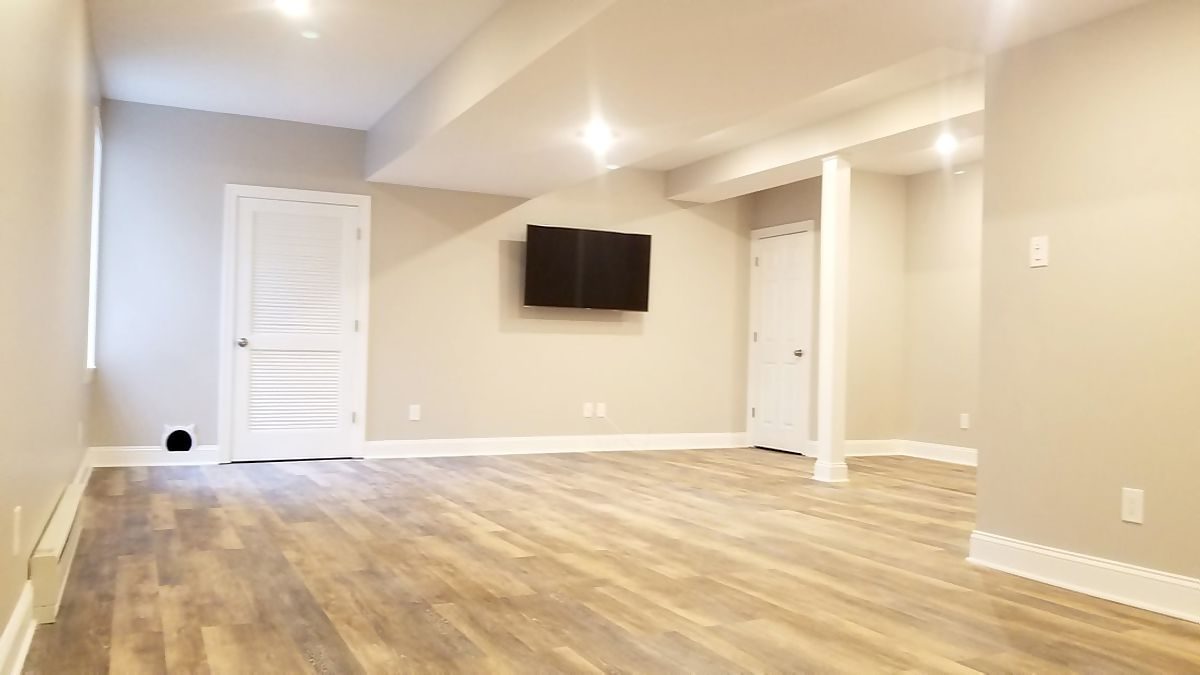
Luxury vinyl plank (LVP) is the popular basement choice for good reason: it's waterproof, warm underfoot, durable, and handles the occasional moisture a basement can see. Tile is the most water-resistant and durable of all, but it's harder and colder underfoot and costs more to install. Carpet is the coziest and cheapest, but it's the riskiest in a space prone to dampness, moisture and carpet don't mix well. For most Lehigh Valley basements, LVP is the sweet spot; tile for the most moisture-prone areas; carpet only where you're confident the space stays dry.
For a finished basement in Center Valley that occasionally saw humidity, we installed LVP throughout. Years later it still looks new, exactly the durability that space needed.
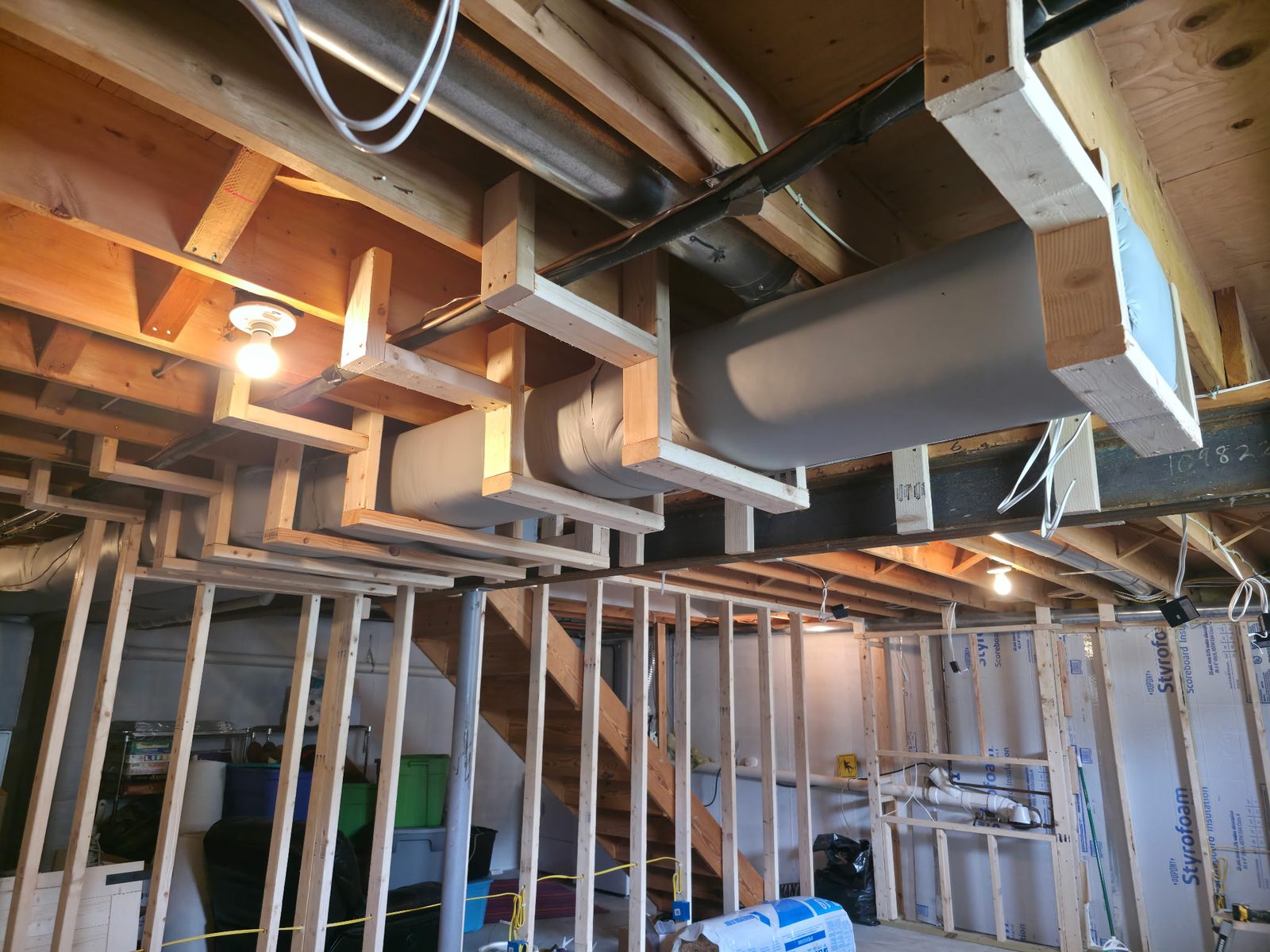
Drywall looks finished and preserves height but seals off access to the mechanicals above. A drop ceiling costs less and keeps pipes, wiring, and shutoffs reachable, valuable in a basement, at the cost of a more utilitarian look and slightly lower height. Choose drywall for appearance, drop ceiling for access and budget.
A Nazareth basement with a maze of pipes overhead got a drop ceiling, which kept every valve and junction reachable, a decision the homeowner appreciated when a minor plumbing fix came up a year later.
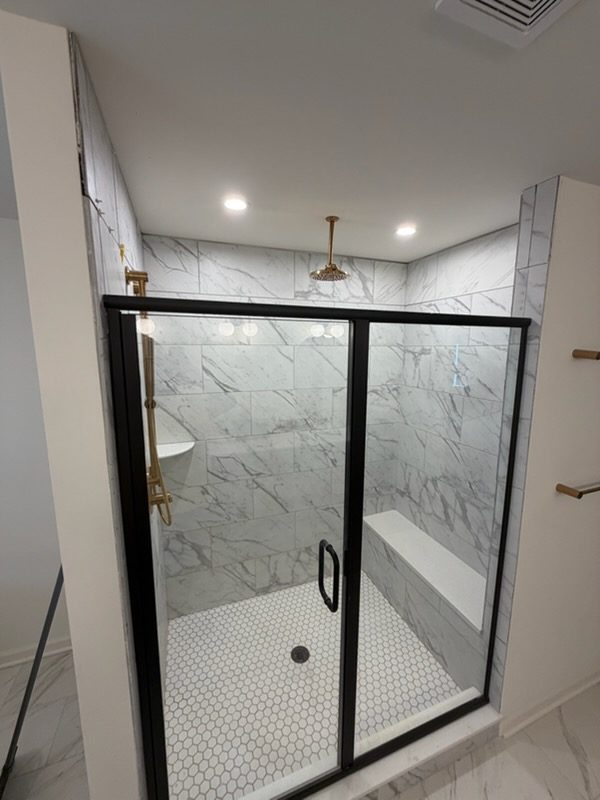
Acrylic shower panels install faster, cost less, and are nearly maintenance-free with no grout lines to clean or seal. Tile offers a premium, custom look and endless design options, but it costs more, takes longer, and the grout needs occasional maintenance. If you want low-maintenance and value, acrylic wins; if you want a high-end custom look and don't mind upkeep, tile is worth it.
A busy family bath in Allentown got acrylic panels for near-zero maintenance, while the primary suite next door got a full custom tile shower. Same house, two materials matched to how each space is used.
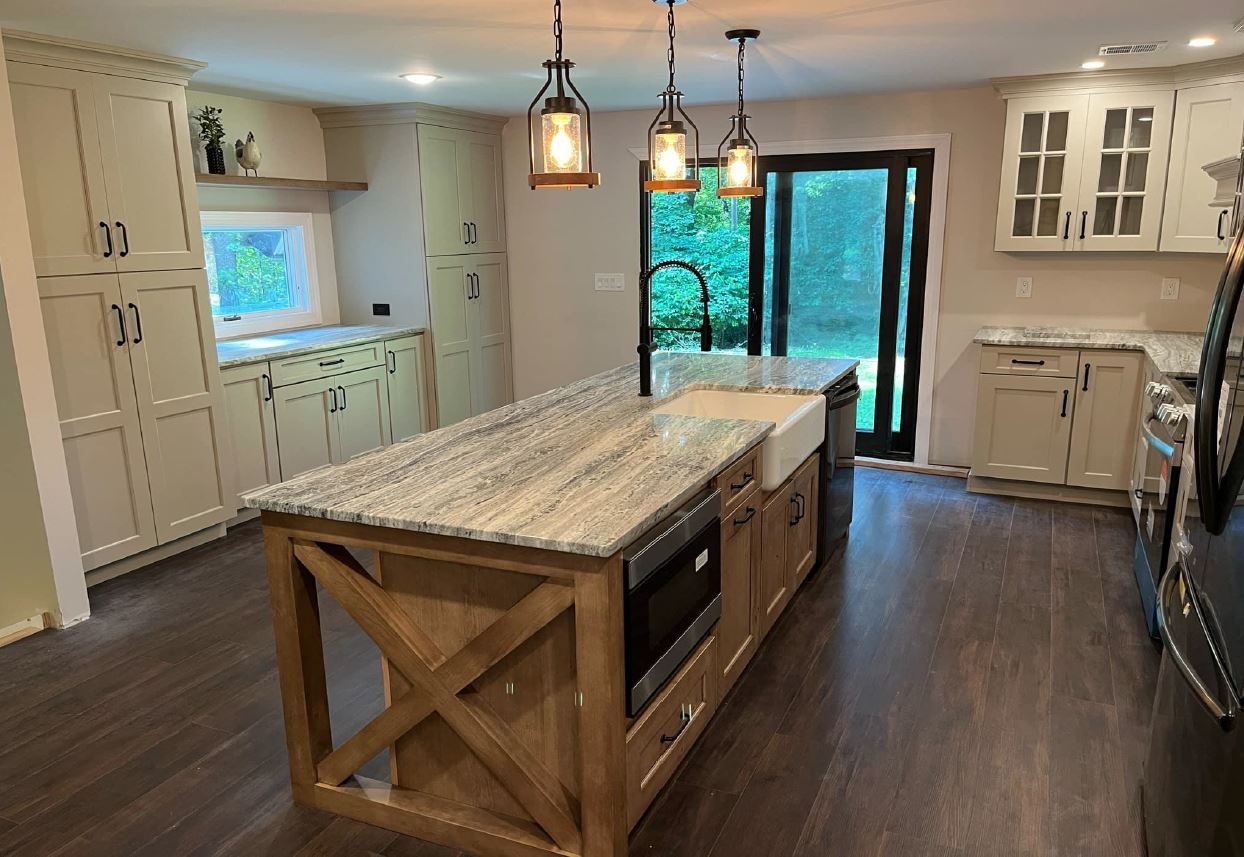
Laminate is the budget choice, huge range of looks, easy to install, but less durable and not heat-resistant. Butcher block brings warmth and character and can be sanded/refinished, but needs periodic oiling and isn't ideal around constant water. Stone (granite and quartz especially) is the most durable and premium, heat- and scratch-resistant, but the priciest. Match the material to how hard you'll use the kitchen and your budget.
In an Easton kitchen remodel, the owner chose quartz for the hardworking main counters and added a butcher-block island for warmth, the right material in the right spot.
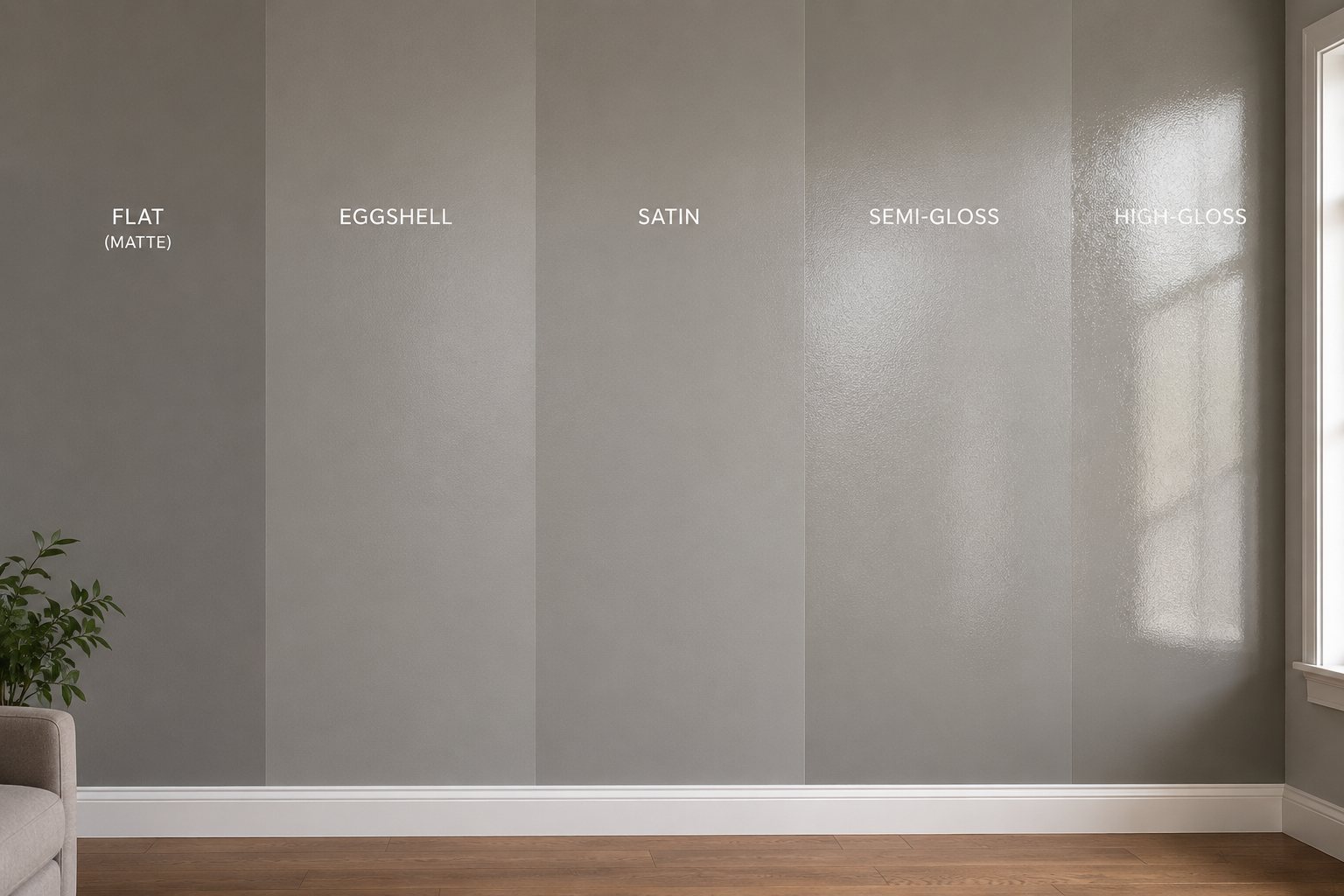
Sheen affects both looks and cleanability. Flat/matte hides wall imperfections best but is hardest to clean, good for low-traffic ceilings and adult bedrooms. Eggshell is the versatile middle ground for most living areas. Satin is a step tougher and wipeable, good for busy areas, kids' rooms, and hallways. Semi-gloss is durable and moisture-resistant, ideal for trim, doors, kitchens, and bathrooms. As a rule, the busier and wetter the space, the higher the sheen.
For a whole-home repaint in Emmaus, we used eggshell in the living areas, satin in the kids' rooms and hallway, and semi-gloss on all the trim and in the baths, each sheen matched to the room's wear.
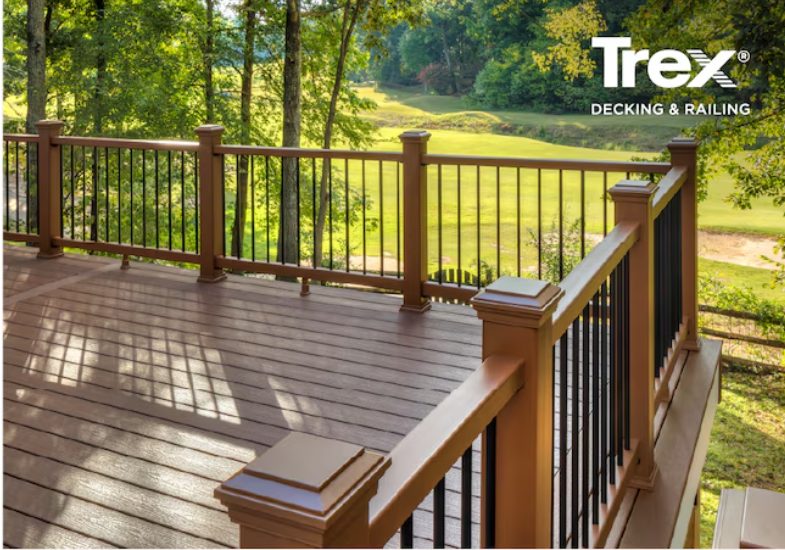
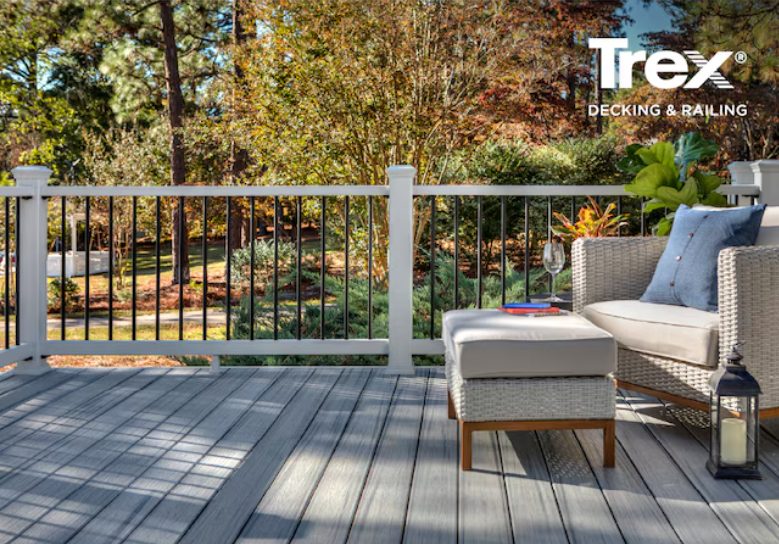
Pressure-treated wood is the most affordable and widely used, but it needs regular sealing/staining and can warp or crack over time. Composite (wood-plastic) costs more up front but is low-maintenance, fade- and stain-resistant, and lasts longer, no annual sealing. PVC is the premium, fully synthetic option: the lightest, most weather- and moisture-resistant, and lowest-maintenance, at the highest price. If budget leads, go pressure-treated; if low maintenance leads, composite or PVC pays off over the years.
A Macungie family tired of re-staining their old wood deck every year switched to composite when we rebuilt it. No more annual sealing, just the occasional wash.
Call us today
Free project estimates, references, and a clear plan before we begin. (Service calls and repairs may include a dispatch fee.)